As someone who took Artificial Intelligence back in college long before it became a daily headline, I’ve watched the digital landscape shift from “search-and-retrieve” to “generate-and-predict.”
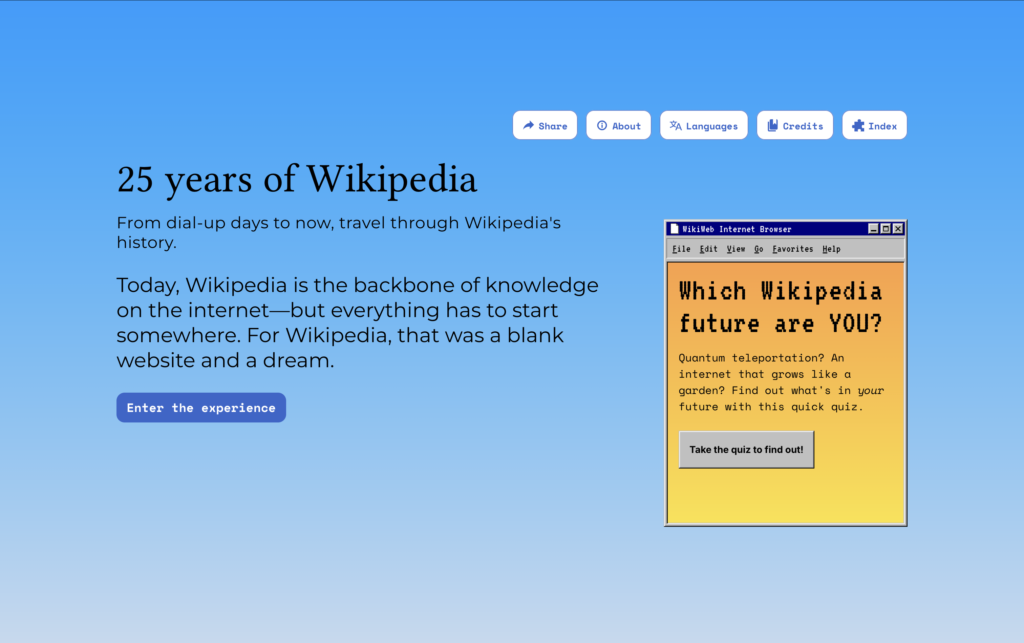
This year, Wikipedia celebrates its 25th Anniversary (Wikipedia25.org), and their chosen theme—“Knowledge is Human”—couldn’t be more timely.
In a world increasingly saturated with “synthetic data” and LLM-generated content, Wikipedia stands as one of the few remaining massive-scale, human-curated datasets.
Most of the sophisticated AI models we use today were trained on the backs of millions of human-edited Wikipedia articles.
As AI begins to “hallucinate” or loop back on its own data, the human-verified citations on Wikipedia have become the ultimate benchmark for digital literacy.
While I spend much of my professional life with Google Ads Scripts, APIs, and Python automation, there is something profoundly impressive about a global project that has remained ad-free and human-driven for a quarter-century.
My Take
If you visit the official anniversary site, I highly recommend checking out the Time Capsule. It’s a fascinating look at how we’ve organized human thought from the early 2000s to the current “Silver Jubilee” of 2026.
We often talk about “Artificial Intelligence,” but Wikipedia reminds us of the power of “Collective Intelligence.” In 2026, the most valuable commodity isn’t just data—it’s trust.